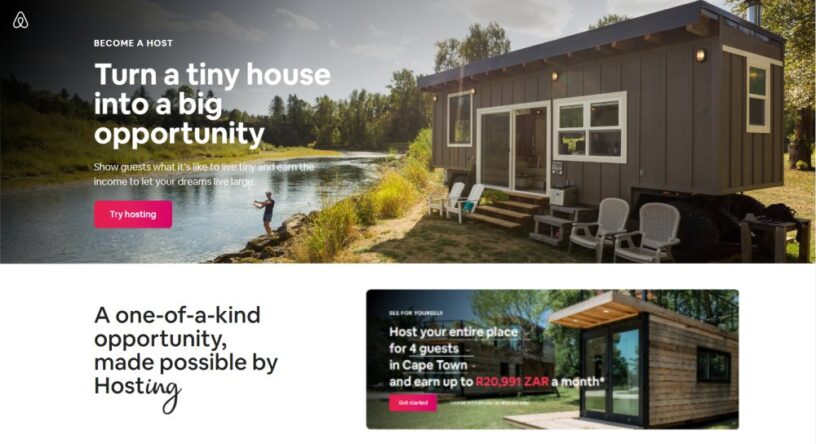


Airbnb claims that you can earn up to +/- R20,991 a month* (based on location read at bottom) renting out or “hosting” a tiny house on their platform. Let’s look a bit deeper at this business.
The current landscape
The self-catering (people sort out their own food and stuff) industry, the category that this format falls under did see growth in the past; before Airbnb even existed there was a myriad of platforms catering to them SafariNow, Afristay, Sleeping-Out etc. etc. There was so much business there was even a website Lekkerslaap (offering the same accommodation as others) that catered to Afrikaans speaking people. Then there was also international players operating locally Booking.com, Agoda etc.
While there were a lot of independent (single owner + 1 helper/assistant) operators, some decided to expand and build portfolio’s. They already had a source of income from their exiting rental stock and the new property was then put up as collateral for the new bond. Some small operators built up portfolios of 10+ properties.
When COVID struck international travel was banned and local travel was restricted and events that also drew people were cancelled left, right and center. For reasons no one has been able to explain the communist apparatchik Ebrahim Patel also went to war with open-toe shoes (I suspect his mother beat him with one when he was a child) but that is another story for another day.
As the bank needed to be paid but the money wasn’t coming in. This caused existing players to start selling off their properties, either piecemeal to stave off total collapse and survive to fight another day or the entire portfolio and call it a day. This has caused existing stock to enter the market, but you can also build your own or buy and existing tiny house currently not used for this purpose.
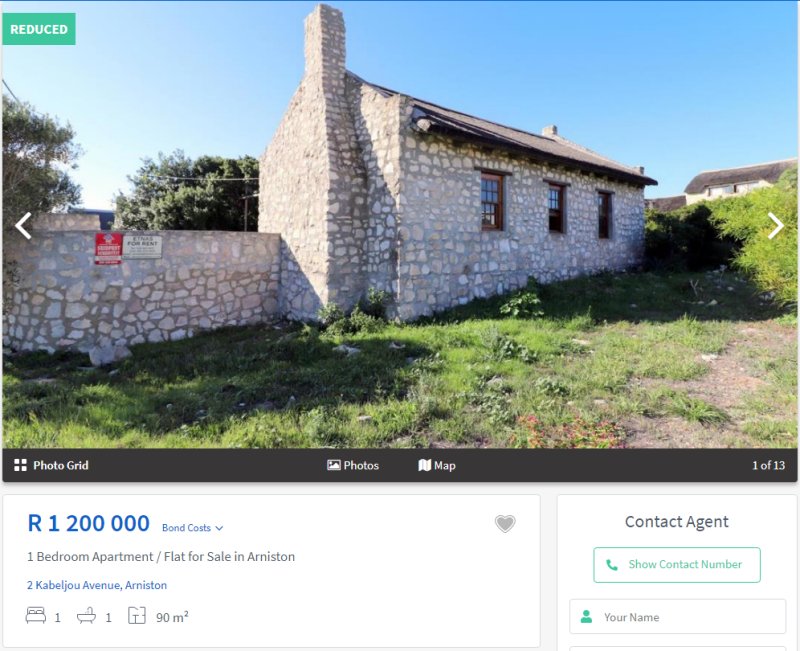
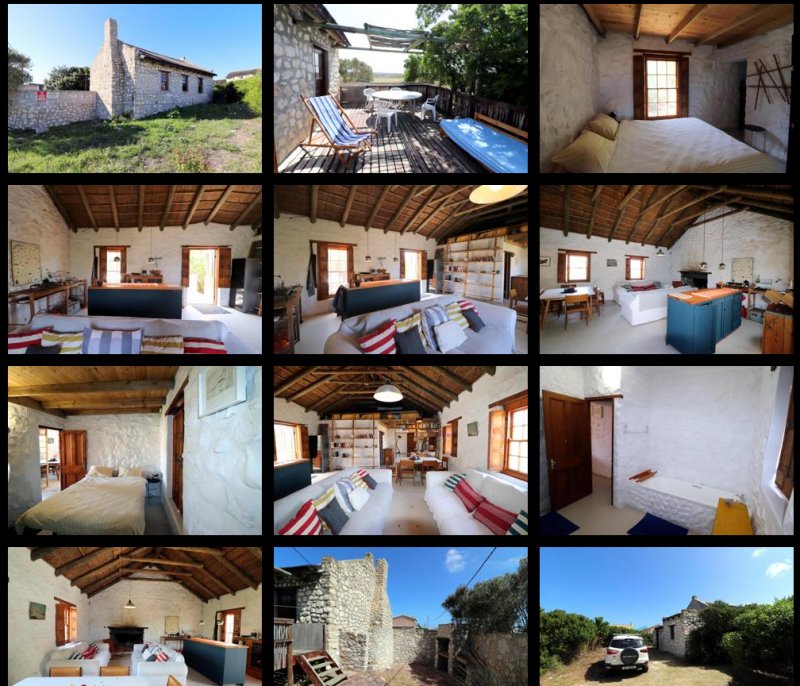
Today we start our adventure in the perlemoen poacher paradise of Arniston – a small seaside village close to Cape Agulhas (the southernmost tip of Africa) around 200km southeast of Cape Town. On the market is a 90m2 house (cobblestone, lime-washed, thatched roofs are common in the area) on a 500m2 plot for R1.2m. Now even though the asking price of this property has already been reduced, I don’t think it is worth R1.2m. But let’s entertain the crazy Western Cape property prices – after all unlike the ANC run provinces they collect their garbage on time, so they deserve a premium.
Copyright Rawson/Property24
Copyright Rawson/Property24
Google Street View
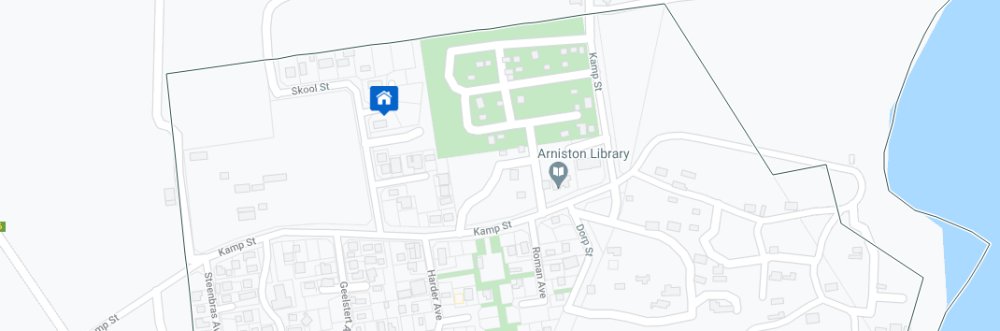
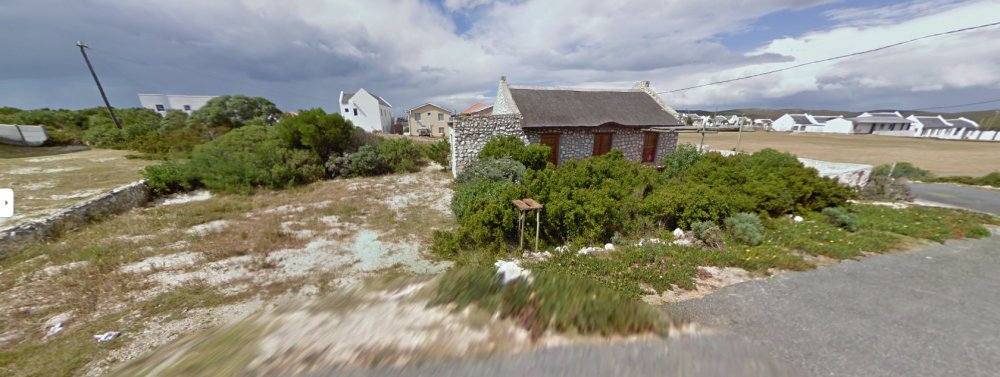
It’s a bit far from the beach but at least there is a library to find refuge in when the rioters arrive. Credit: Property24
It is a 1 bed but the “upstairs loft can be converted to extra sleeping space” it will then meet the 4 sleeper criteria. According to the bond calculator, you looking at a monthly repayment of R9484 (once off costs of R70k because in South Africa you are punished for being successful and be able to afford a house), rates and taxes are claimed at R2000 per month (seems a bit high but we know Helen Zille’s goons don’t mess around). Now we are already down R11484pm, water and electricity is your baby, daily laundry of bedding, towels is your responsibility. And this excludes the management giving people the key, getting the place ready, cleaning after every guest. It becomes clear even with Airbnb’s optimistic projections you need to own at least ten of these if you want to have a R1m a year (gross) business. But even then Supreme Leader Matamela Cyril Ramaphosa tells us that is not enough:
Ramaphosa says R1 million-a-year MPs ‘struggle to make ends meet’ https://t.co/nKOKq4UziL via @businesstechSA
— Cher (@Cher69805418) June 4, 2021
This business can then be described as a 20 year marathon, if you can support yourself while growing your portfolio and put all excess profits back in the bonds (while saving for a rainy day) then you might have enough to retire on or afford a golden visa out of SA when you decide to call it a day and cash out.
Now we already know from our previous discussions that the bank will not lend – even to a going concern like a guesthouse – based on the cashflow of the property being acquired – even with the cash generating property being put up as collateral for the loan. Don’t take my word for it, from the mouth of specialists in the guest house selling space:
Q: Should I check with a bank before I look for a hospitality property?
A: If you are looking for funding then yes, this would be a wise decision to make. There area a whole bunch of reasons why you should first talk to your bank to get pre-approved. One of the main reasons are that the banks will generally not give any funding for any hospitality property. The only way that the banks will consider any funding is if a potential client applies for a bond as a regular home loan and you would then have to qualify from another income that you have for the bond. You have to be sure that you are able to afford the monthly repayments. There are low occupancy months where guesthouses do not make sufficient income to cover all the costs.– guesthousesale.com
However, I don’t think that the economics on tiny house rentals are that great. Let’s think here, what is the max amount of people that fill it? I think four maybe, so two couples or a couple and two children. And that is what the Airbnb projections are based on 4 (see below). In the same area there is a 3 bedroom house, also 90m2 but only R100 000 more (R1.3m).
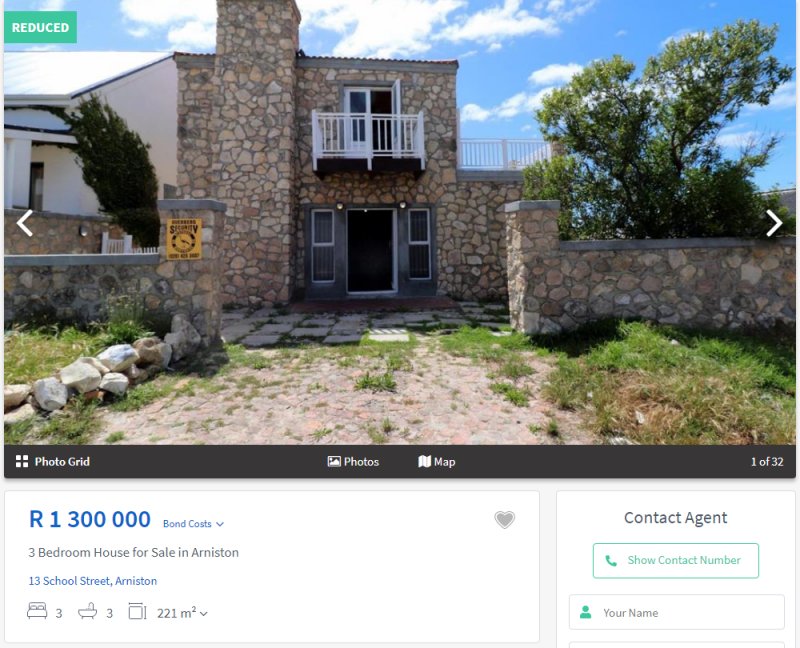
Copyright Rawson/Property24
It has a open plan lounge/kitchen area downstairs with built in fire place. Downstairs you will also find 2 bedrooms. One with ensuite bathroom and a guest bathroom. Upstairs is another bedroom with full ensuite bathroom that walks out onto a small balcony with a sea view. The upstairs lounge area walks out onto two more balconies.
The effort involved to manage a 3 bedroom place vs a 1 bedroom place is not that much more. But you can fit at least 6 people in (2 in a room). I would also scatter two sleeper couches randomly and call it a “8 sleeper”. So I am not a big fan of the small format 4 person rental quoted by Airbnb unless you can scale up the properties to a few in close proximity and have a central laundry facility for all. The same laundry people can also have cleaning duty etc.
Now I want to make clear to you that the existing stock being disposed of as the Etnas above are most likely the least performing units of their portfolio so unless you going to do more marketing or use more platforms the units are mostly not that popular. If you going to move to the area to enter the Chinese aphrodisiac market then fine but as a rental look out for that.
Lastly let us tackle Airbnb’s calculations, first the R20,991. How are they getting it?
They say:
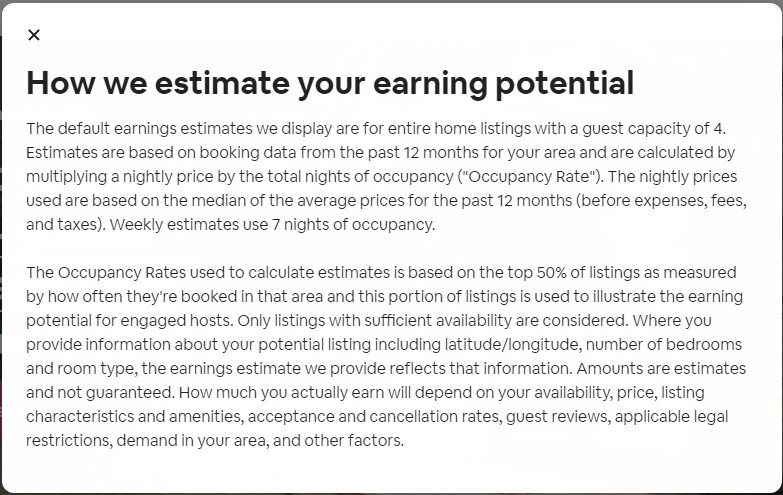
Note the term “for your area“, as you can see they are pulling data from the area selected.
This is skewing earnings because it only pertains to Airbnb platform and in Arniston Airbnb is not popular, operators have their own websites to take bookings and some use the local platforms. Airbnb requires you do a lot of mollycoddling to give people an “experience”. Their numbers are Arniston show clearly that Airbnb is not the choice of local hosts. Look at this:
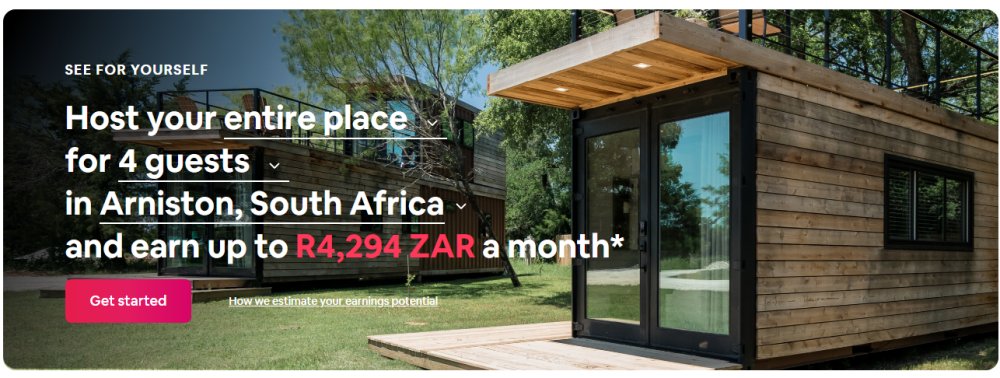
From R20k in the Cape to R4k in a quaint village. We could infer from this that Airbnb is not the choice of hosts in fishing villages.
So people in Cape Town are making on average R21k a month for a 4 sleeper and your area might vary. Now I live in Cape Town’s northern suburbs which is suburbia and don’t have the fishing cabins by the lake you see above. Due to its central location it is mainly used for business travel or other social travel due to its proximity to the N1 close to Century City and sitting halfway between business hubs of Tygervalley and Cape Town CBD, the V&A Waterfront is 20km away). There is no beach, there is a nature reserve (Tygerberg) down the road but I don’t think many travel from far to go there as it is boring and I only ever saw a hairyworm and apparently there are ticks. But there are lots of plants including “Swartland Shale Renosterveld” so maybe plant people come to visit it is also 300ha (3 square kilometer) so people might come to hike, but I value my life too much to go any further than the picnic area unless I am armed to the teeth.
What I am trying to say is if you are going to enter an area, and we have already established that you will need to go in deep and commit, careful thinking is required around what amenities attracting people to the area because if you extract yourself sooner than two decades you might run at a loss for the following reasons:
* Property in outlying areas don’t increase or appreciate in value like the cities.
* That bond that you are committing to, even at the low 7.25% interest. You going to be paying over a million rand interest over 20 years on that R1.2m. You need to sustain and service that. Walk away sooner and you lose that control and could end up losing money if you are forced to sell at a sub-optimal time, you could end up losing everything including your main source of income to pay your house and you could end up in a real tiny house: living in a van down by the river.
More reading on this subject
Should You Buy an Airbnb Tiny House to Rent Out?
Building A Tiny House For Airbnb Rental